
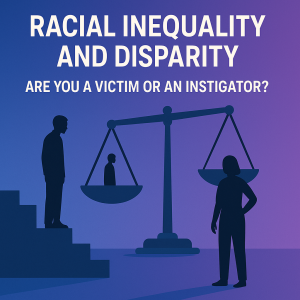
The psychology of racial injustice involves a complex mix of cognitive, social, and emotional factors that contribute significantly to prejudice, discrimination, and systematic inequality. A few key psychological concepts include the idea that humans naturally categorize others by race and gender. This movement can lead to ‘us’ vs ‘them’ thinking, which fosters favoritism toward one’s group and is laced with bias against others. People can hold unconscious attitudes or stereotypes that affect their understanding, actions, and decisions. These biases are shaped by cultural messages and societal structures. As traits and behaviors are generalized to an entire group, individuals are reduced to simplified, often negative labels. This idea reinforces discriminatory attitudes and actions, thereby creating what is better known as ‘social learning,’ creating a new set of racial attitudes and behaviors inherited from family, peers, media, and broader cultures, especially during early development.
‘System Justification’ occurs when people have a psychological motive to view existing social systems as fair and just, even when unequal. This can lead to denial or minimization of racial injustice. As we move to explain further ‘racial injustice,’ it cannot be forgotten that the idea of dehumanization appears as other races view people as being less than human or less deserving, which somehow justifies the mistreatment or violence against other races and is often used to rationalize unjust systems or actions. As I further explain this overlapping racial phenomenon, the concept of ‘moral disengagement’ appears as some individuals distance themselves from the moral implications of racist behavior by blaming victims or using language like ‘law and order’ instead of targeting the use of ‘racial profiling.’ While closing out this topic, we cannot dismiss the ideas of ‘group norms’ and identity, where many people often conform to the norms of their racial or cultural group, usually to maintain social belonging and self-esteem, even when those norms are biased. It’s important to know that this explanation plays out in racial profiling, employment discrimination, education disparities, media representation, and healthcare inequality.
This Article was Last Updated On: April 10, 2026