
DID YOU KNOW?
After writing and publishing ‘Simply Common-Cents, the Discipline of Uncommon Reasoning,’ I’ve had more time to research and associate this book to a higher learning curve. As ‘Simply Common-Cents’ explains in detail the reasoning behind our emotions, it also illustrates how you can handle those emotions appropriately. Therefore, I crafted a step-by-step process that takes individuals from identifying their feelings to rating the impact of those feelings from 0-10, ten being the worse.

Finding solutions to problems is the ultimate goal for anyone seeking help therapeutically. This mental state of being that leaves you angry and confused leads to more profound depression. During our lives, the mind is exposed to good and bad conditions and if the bad outweighs the good, know for sure that a problem exists. The motivation to heal is wanting to heal. If the want isn’t significant enough, the condition you live and think will thrive. There is a sure thing about learning: it never becomes dated.
As I combine the lesson behind ‘Simply Common-Cents,’ with an in-depth comparison to the conscious and subconscious mind, the difference is shoring up the finite distinctions of the subconscious mind. In this book, the conscious mind is active as it works as the creator of information. This information finds its way to the memory stored in your subconscious. While moving forward with these new concepts of learning and understanding, the result will assist you in changing behaviors by changing your beliefs that no longer serve a purpose and leave you psychologically deprived. The following segments will speak directly to the ideology of what cognitive science represents and how the two minds work independently.
In the following segments, I will explain the notion of the two minds we all share. To move successfully, one must face fear and disbelief. Fear keeps us mentally shackled, while disbeliefs prevent us from engaging in new perspectives. Leveraging your conscious and subconscious mind is essential to know the difference between each one. Once you can learn the difference, it’s time to clear that negative storage and replace it with good thoughts and new beliefs.
Shaping the literary model of ‘Simply Common-Cents,’ and the conscious mind, my words take the life of daily currency or living in the now. I often speak about reasoning, which means thinking through an issue before acting on it. This conscious ingestion of analysis subscribes to an honest evaluation of thought and deeds. As one thinks, the process takes you to one of two places, right or wrong, or yes versus no. No one can determine your right, nor can anyone assess your ideas of wrong. This distinction begins to unravel when your thinking ability is invalid.
To summarize the introduction by tying in the conscious and subconscious mind, consider the subconscious as the world that creates the cause. In contrast, the conscious mind represents the thinking world without creating the effect. To change the outcome, one must change the reason. What ‘Simply Common-Cents’ and Mental Science agree that all achievements depend on the method of thinking used.
Thoughts of courage, power, inspiration and harmony are substituted by ideas of failure, despair, setting limitations, and mental discord. While these thoughts take root, the old thoughts pass away. Therefore, be mindful of what you think about. Don’t think about something you don’t want to do because my question to you would be, WHY waste time?
This Article was Last Updated On: September 5, 2025
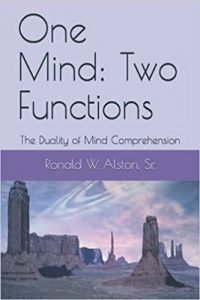
Understanding thinking differences is critical to understanding why your bad habits continue. Find out for yourself that you’re still in control by purchasing my book, One Mind, Two Functions.